
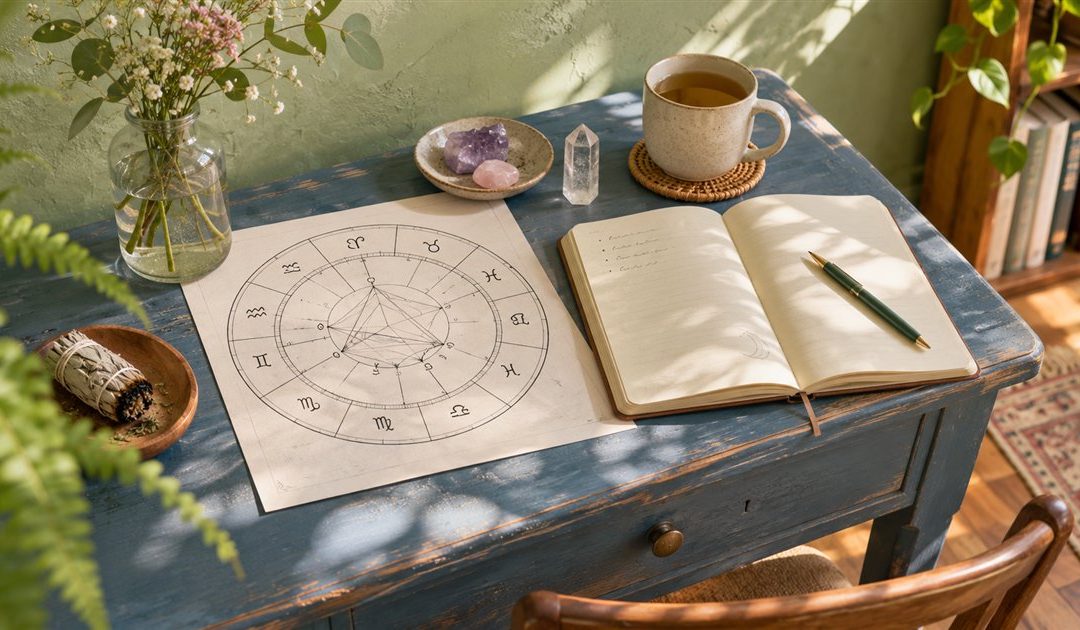
If astrology gives you a language for thinking about your life, your birth chart can help you notice what you need more of this week. Start with one placement and one lived example. A question about rest or boundaries is often easier to act on than a reading of the entire chart.
Use a placement to name a need
- Moon for comfort
- Think of a moment you felt at ease recently. Who was there, and what made it possible?
- Mars for effort
- Where are you spending energy by habit? Which task would still matter if you had less time?
- Saturn for structure
- Which routine makes the week easier? What responsibility could you renegotiate?
- Venus for connection
- What kind of attention, enjoyment or companionship would you like to make time for?
A worked example for a crowded week
Suppose you read Saturn as a symbol of structure and notice that you regularly accept plans on your only free evening. Write down what you want that evening to make possible. Your next action might be to keep Thursday free for a week and see whether you feel more rested. Revisit the choice based on how the week actually goes.
A birth-chart prompt you can use this week
A Moon placement may bring up questions about comfort. Think of the last time you came home overstimulated. What made it easier to settle in?
Try one small change. Leave ten minutes free before answering messages after you get home. At the end of the week, ask whether that time felt restful.
If you know your birth details and want to explore more placements, use the free astrology tools.
Keep the chart in proportion
Some readers use astrology to find words for stress or to prepare for a conversation. If you are having persistent changes in mood, sleep or daily functioning, tell a qualified health professional what you are experiencing. The NIMH guide to caring for your mental health describes practical support options.
To explore the language of placements further, see natal charts and Saturn retrograde. If your reflection concerns a relationship, the synastry examples give you more ways to ask about a pattern you have both observed.