
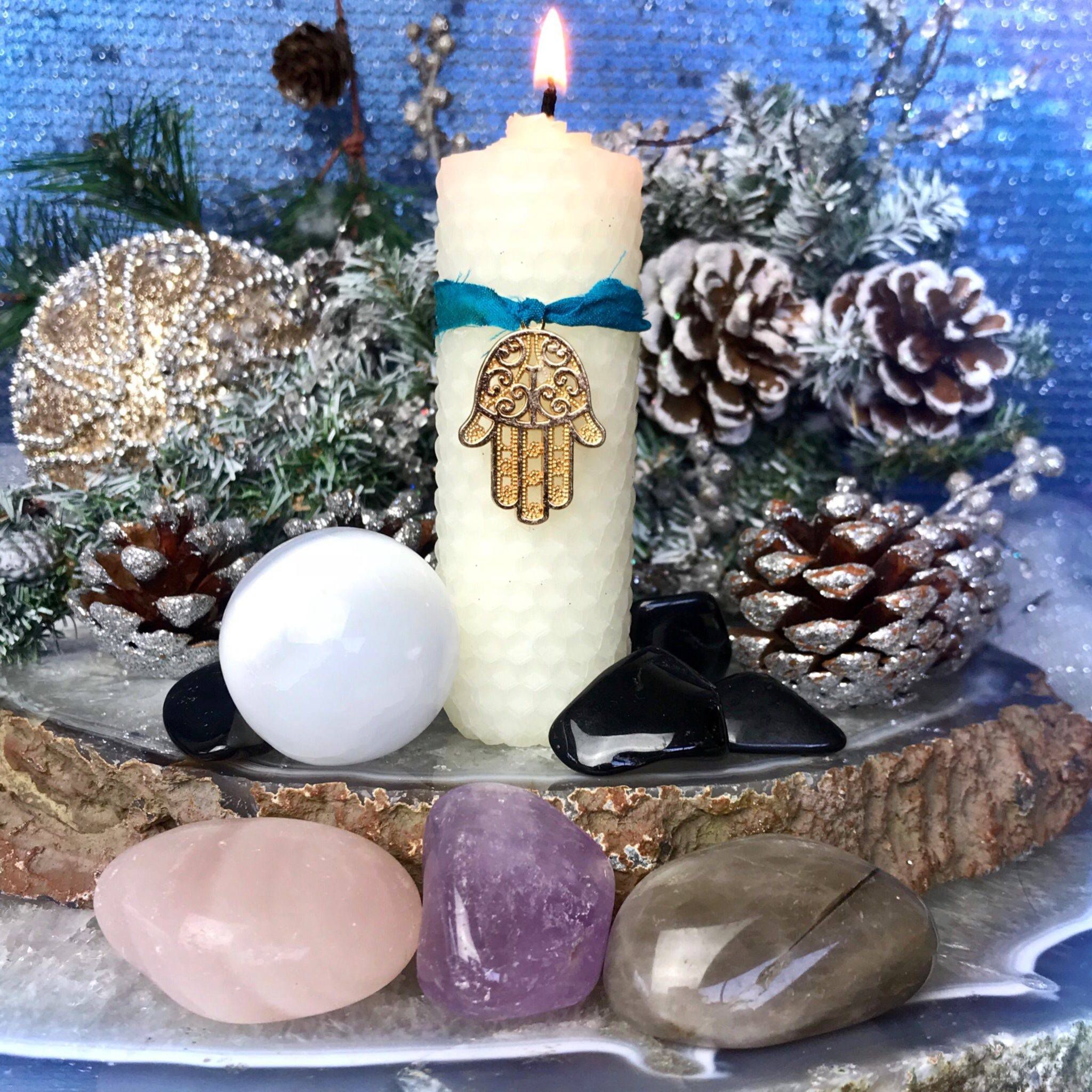
A mystic candle blessing can be a simple ritual for attention, prayer or reflection. The flame does not guarantee healing, protection, money, fertility or contact with spirits. Its value comes from the meaning you choose, the words you speak and the action you take afterward.
You need only a plain candle or a flameless LED light, a stable surface and a few quiet minutes. A kitchen table, home-office corner or sheltered yard can feel sacred without expensive décor.
Candle safety comes first
Health Canada advises never leaving a burning candle unattended. Place it in a sturdy, non-combustible holder away from curtains, paper, clothing and other items that can catch fire. Keep children and pets away.
Extinguish every flame before leaving the room or going to sleep. Use a flameless candle where open flames are prohibited, ventilation is limited or safety is uncertain. Symbolic practice does not require fire.
What a candle blessing can—and cannot—do
A blessing can mark an intention, memorialize someone, begin a meditation or help you pause before a decision. It cannot:
- treat illness or replace medical care;
- guarantee protection from harm;
- make another person love, forgive or contact you;
- produce money, fertility or legal success;
- prove that a spirit or angel sent a message.
Choose an intention that remains within your control.
A five-step candle blessing
- Name the purpose. Write one sentence about what you want to practise or remember.
- Prepare the space. Clear flammable objects, silence distractions and place the candle securely.
- Light or switch on the candle. Take three comfortable breaths and orient to the room.
- Speak the blessing. Use your own words or a short example below.
- Choose an action. End with one practical step and extinguish the flame fully.
A timer of five to ten minutes helps keep the ritual focused and safe.
A neutral blessing
May this light remind me to meet today with attention, courage and care. May I act on what I can change, seek help where I need it and release what is not mine to control.
You may address God, ancestors, nature, your community or no spiritual being at all. The ritual should fit your own beliefs.
Choosing a colour
Colour meanings vary among cultures, traditions and individuals. Treat the following as optional prompts, not universal powers.
White: simplicity and a fresh start
Use white when you want minimal symbolism or wish to represent clarity. It does not provide supernatural protection or healing.
Orange: creativity and sociability
Orange may prompt playful ideas or a willingness to connect. Pair the ritual with a concrete step such as drafting, practising or sending an invitation.
Green: growth and practical resources
Green may symbolize plants, patience, budgeting or gradual growth. A candle cannot eliminate debt or affect fertility; use qualified financial or health guidance.
Purple: contemplation and spiritual study
Purple can mark prayer, meditation or reflection on mystery. It cannot guarantee contact with a deceased person or open psychic abilities.
Blue: calm and honest communication
Blue may support a pause before a difficult conversation. Follow the ritual with direct, respectful words. It does not send healing power to people, animals or the planet.
Black: boundaries and endings
Some practitioners use black to represent privacy, release or protection. A useful action might be blocking unwanted contact, reviewing a safety plan or closing a completed project.
Pink: affection and friendship
Pink may represent warmth, self-compassion or appreciation. It cannot create consent or change another person’s feelings. Choose an action that respects their autonomy.
Red: energy and commitment
Red can represent courage, vitality or a decision to begin. It is not a fertility treatment and does not guarantee passion.
Brown: stability and home
Brown may suggest practical grounding, land or daily routine. It will not locate a lost object by itself; search methodically and ask for help.
Gold: celebration and generosity
Gold can mark gratitude, achievement or hope. It does not attract fortune or control cosmic influences.
For angel-related colour traditions, read these seven symbolic angel-colour associations and their limits.
Blessing for a new beginning
May this light mark a beginning I can support with steady action. Help me notice the next honest step, welcome useful feedback and adjust when circumstances change.
Write the next action before extinguishing the candle. Keep it small and observable.
Blessing for grief and remembrance
I remember the life and relationship that shaped me. May this light hold love and grief together while I care for myself and remain connected to the living.
A memorial candle does not prove communication with the deceased. If grief is overwhelming or persistent, seek appropriate human support.
Blessing before a difficult conversation
May I speak clearly, listen without assuming and respect both my boundary and the other person’s choice. May I pause if the conversation becomes unsafe.
Decide where, when and how the conversation will occur. A ritual cannot make another person respond well.
Blessing for money stress
May I face the numbers honestly, protect essential needs and ask for qualified help. Let this light mark one practical action rather than a promise of sudden wealth.
Use the time to list bills, contact a creditor or book an appointment with an appropriate adviser. Do not pay for a ritual that guarantees debt removal.
Blessing for health-related uncertainty
May I meet uncertainty with compassion and evidence. Help me describe my symptoms clearly, keep my appointment and accept support while I wait for qualified care.
The candle is a comfort practice only. Do not delay diagnosis, treatment or emergency help.
Using herbs, oils and decorations
Loose herbs, paper, ribbons, crystals and oil near a flame can increase fire or burn risk. Do not place combustible objects in melted wax or near the wick. Follow the manufacturer’s directions.
Fragrance may trigger headaches, asthma or sensitivities. Use an unscented or flameless candle when needed, especially in shared spaces.
Preparing a new candle
Inspect the container, holder and wick. Remove packaging and place the candle on a stable surface. You may clean the outside or hold it while stating an intention; no cleansing method is required to make it spiritually safe.
For optional preparation methods that apply to tarot, crystals and other objects, see this guide to safe physical care and symbolic preparation of divination tools.
Group and online rituals
Tell participants in advance that the practice is optional and symbolic. Offer a flameless alternative, do not require disclosure and avoid claims about healing or outcomes.
During an online gathering, each participant is responsible for their own safe setting. Nobody should leave a candle burning to stay visible on camera.
A seven-day candle practice
- Choose one intention for the week.
- Use the same five-minute ritual each day.
- Write one practical action after each session.
- Record whether you completed it.
- On day seven, review actions—not omens.
The candle creates a beginning and an ending. The change comes from what you practise between them.
Frequently asked questions
Do candle colours have healing powers?
No. Colours can carry personal or cultural symbolism, but a candle does not treat illness. Use it as a reflection prompt alongside appropriate health care.
Can I use a flameless candle for a blessing?
Yes. An LED candle can mark the same intention without an open flame and is often the safer choice around children, pets or combustible materials.
Can a candle blessing bring money or love?
No ritual can guarantee money or control another person’s feelings. Choose a practical action such as budgeting, communicating or meeting new people with consent.
How long should a candle blessing last?
Five to ten minutes is enough for a focused practice. Keep the flame attended at all times and extinguish it before leaving the room or going to sleep.